Licensed and at Risk: How a Criminal Charge Can Strip Washington Professionals of Their Careers Before Any Verdict Is Reached
Photo: Unknown authorUnknown author, Public domain, via Wikimedia Commons
Most people who face a criminal charge in Washington State focus, understandably, on the criminal case itself. Will there be jail time? What does a conviction mean for their record? These are legitimate concerns. But for the hundreds of thousands of Washingtonians who hold professional licenses—nurses, teachers, real estate agents, contractors, social workers, accountants, and many others—the criminal case is only one front in a two-front battle. The second front is their regulatory board, and it operates by entirely different rules.
Licensing boards in Washington State are empowered to investigate, suspend, and revoke credentials independently of what happens in criminal court. They do not require a conviction. In many cases, they do not even wait for a verdict. The result is that a professional's career can be derailed—sometimes permanently—while the underlying criminal matter is still being litigated.
How Washington's Licensing Boards Operate Independently
Washington's Department of Health, the Office of Superintendent of Public Instruction, the Department of Labor and Industries, and dozens of other regulatory agencies each govern their respective professions under separate statutory authority. These agencies are not bound by the presumption of innocence that governs criminal proceedings. Their mandate is to protect the public, and they are permitted to act on that mandate the moment they determine a licensee may pose a risk.
When a criminal charge is filed, many licensing boards receive automatic notification. Others rely on self-reporting requirements embedded in licensure agreements—requirements that obligate professionals to disclose arrests or charges within a specified window, sometimes as short as thirty days. Failure to self-report, even when the underlying charge is eventually dismissed, can itself become an independent grounds for disciplinary action.
Once a board opens an investigation, it may impose an emergency suspension, place conditions on a license, or initiate formal revocation proceedings. These actions carry their own hearing processes, their own evidentiary standards, and their own appeal mechanisms—none of which align neatly with the criminal court calendar.
The Professions Most Frequently Affected in Seattle
While any licensed professional can face collateral licensing consequences, certain fields are particularly vulnerable given the nature of their regulatory oversight.
Healthcare workers, including registered nurses, licensed practical nurses, physicians, and mental health counselors, are regulated by the Washington State Department of Health. Charges involving controlled substances, assault, or fraud are among the most common triggers for emergency license restrictions in this sector.
Educators hold certificates issued through the Office of Superintendent of Public Instruction. Any charge involving violence, sexual misconduct, or crimes against children can prompt immediate certificate review, with potential suspension pending the outcome of criminal proceedings.
Contractors and tradespeople licensed through the Department of Labor and Industries may face bond and license complications following theft, fraud, or financial crime charges.
Accountants and financial professionals regulated by the Washington State Board of Accountancy are subject to disciplinary review for charges related to dishonesty, fraud, or breach of fiduciary duty.
In each of these fields, the reputational and financial damage of a licensing action can exceed the direct consequences of the criminal charge itself.
Why Timing Is Everything
One of the most critical—and least understood—aspects of professional licensing consequences is how quickly the regulatory machinery can move. Unlike criminal proceedings, which often extend over months or years, licensing boards can act within days of receiving notice of a charge. An emergency suspension can be issued without a prior hearing in circumstances where the board concludes that immediate action is necessary to protect public safety.
This creates an asymmetry that catches many professionals off guard. They retain a criminal defense attorney and begin preparing their legal strategy, while simultaneously receiving a certified letter from their licensing board demanding a response within fifteen days. Without coordinated legal guidance, professionals may inadvertently make statements to their regulatory board that complicate their criminal defense, or vice versa.
The Fifth Amendment right against self-incrimination does not disappear in a licensing proceeding, but exercising it in that context carries its own risks. A licensing board may draw adverse inferences from silence in ways that a criminal court cannot. Navigating this tension requires deliberate, strategic coordination between criminal defense counsel and, in some cases, an attorney who specializes in administrative law.
What a Seattle Defense Attorney Can Do on the Licensing Front
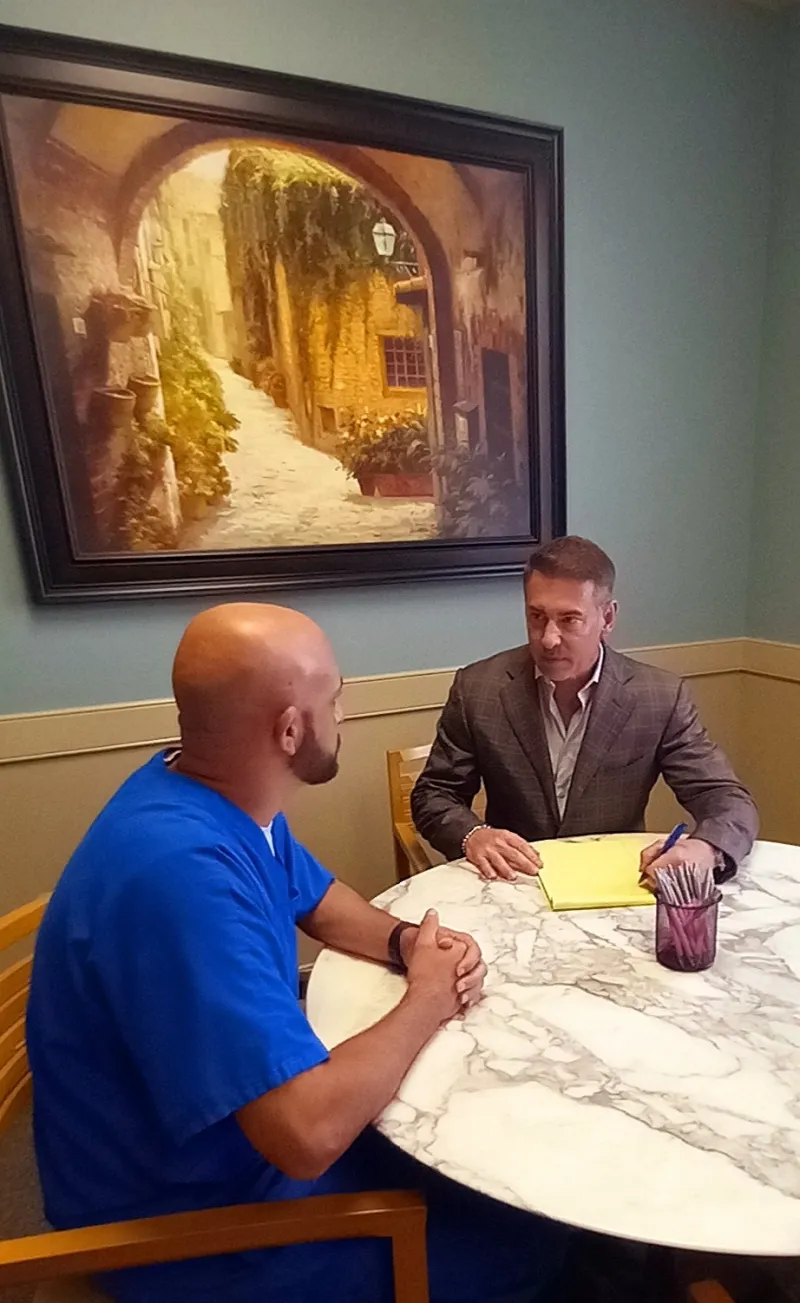
Experienced Seattle criminal defense attorneys who regularly represent licensed professionals understand that their clients are facing two simultaneous legal challenges. Effective representation in these situations goes beyond preparing for trial or negotiating with prosecutors. It extends to actively managing the regulatory dimension of the case.
This may include reviewing the client's licensing agreement to identify specific disclosure obligations and deadlines, advising on how and when to communicate with the licensing board, and in some circumstances, engaging directly with board investigators to provide context that may mitigate the perceived risk. Defense counsel may also seek to coordinate the timing of board proceedings with the criminal case, particularly where an acquittal or dismissal of charges would significantly affect the licensing outcome.
In cases where a licensing board has already imposed an emergency suspension, defense attorneys can assist in requesting an expedited hearing or seeking a stay of the suspension pending the criminal proceeding. While these remedies are not always available, the effort to pursue them is often worth the attempt.
The Self-Reporting Obligation: A Hidden Trap
Perhaps the most underappreciated risk for licensed professionals is the self-reporting requirement. Many professionals are unaware that their licensing agreements require disclosure of arrests—not just convictions—and that the obligation is triggered even when charges are minor or likely to be resolved favorably.
Failing to self-report within the required timeframe is treated by many boards as an independent act of dishonesty, one that can result in disciplinary action entirely separate from the underlying charge. Professionals who assume they can wait and see how the criminal matter resolves before notifying their board may find themselves facing a more serious licensing problem than the original charge would have created.
An attorney who understands both the criminal process and the regulatory landscape can help clients navigate this requirement carefully—ensuring that self-reporting obligations are met without unnecessarily prejudicing the criminal defense.
Protecting What You Have Built
A professional license represents years of education, training, and investment. For many Washingtonians, it is the foundation of their financial security and professional identity. The prospect of losing it—not after a conviction, but simply because a charge was filed—is one of the most devastating aspects of a criminal case that most people never anticipate.
If you hold a professional license and are facing criminal charges in Seattle or anywhere in Washington State, the time to address the licensing consequences is now, not after the criminal case concludes. The decisions made in the early days of a case can shape outcomes on both fronts. Retaining defense counsel who understands this dual exposure is not a luxury—it is a necessity.
Seattle Defense Attorneys connects individuals with experienced criminal defense counsel who understand the full scope of what is at stake when a charge threatens not only your freedom, but your livelihood.