Eyes Everywhere: How Seattle's Expanding Surveillance Infrastructure Is Changing the Way Criminal Cases Are Built and Fought
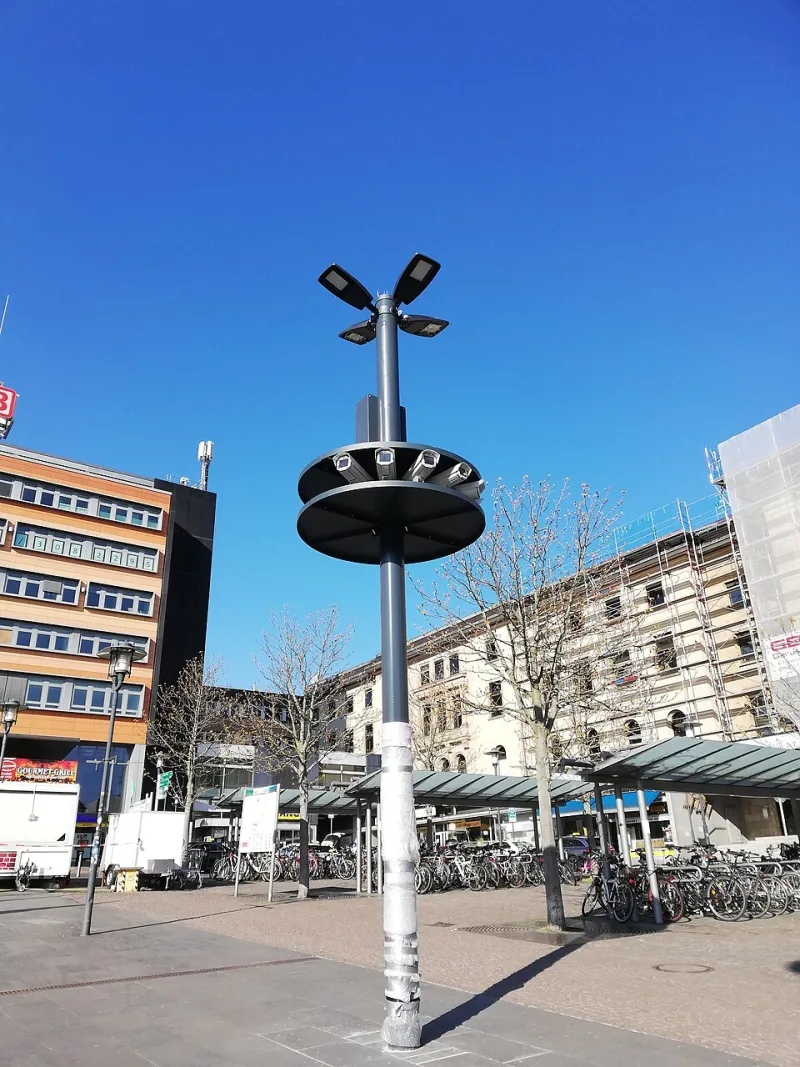
Photo: µKöff, CC BY 4.0, via Wikimedia Commons
The City Is Watching—and So Are Prosecutors
Walk through almost any Seattle neighborhood today and you are passing through a layered web of observation. Traffic cameras mounted at intersections, private business security systems, automated license plate readers affixed to patrol vehicles and fixed poles, and, increasingly, facial recognition software capable of matching a face to a database of millions—all of these tools are generating data that prosecutors can and do use to build criminal cases.
For defendants facing charges in King County and across Washington State, this technological landscape represents a significant shift in how evidence is gathered and presented. What once required a witness or a physical search can now be reconstructed through digital surveillance footage, timestamped location data, and algorithmic identification. The implications for anyone charged with a crime are profound, and the legal battles over this evidence are reshaping criminal defense strategy in fundamental ways.
What Surveillance Tools Are Actually in Use in Seattle
Seattle operates one of the more extensive urban surveillance networks on the West Coast. The Seattle Police Department has access to hundreds of city-owned cameras, and that number grows substantially when you account for privately owned systems—retail stores, apartment complexes, parking garages, and residential doorbells—that law enforcement can request footage from.
Automated license plate readers, or ALPRs, are deployed across the city on both mobile patrol units and fixed infrastructure. These devices photograph every passing vehicle, record the plate number, timestamp the image, and log the GPS location. The resulting database allows investigators to reconstruct a vehicle's movements across days, weeks, or even longer periods. In practice, this means a prosecutor can place a defendant's car at or near a location without a single eyewitness account.
Facial recognition technology presents perhaps the most contested frontier. While the City of Seattle passed an ordinance in 2013 restricting certain surveillance technologies, the legal landscape surrounding facial recognition has continued to evolve. Law enforcement agencies in Washington have access to state and federal facial recognition databases, and the accuracy—and bias—of these systems has become a central argument in criminal defense challenges.
Where the Legal Vulnerabilities Lie
The existence of surveillance evidence does not automatically make it admissible or legally obtained. Experienced Seattle defense attorneys examine this evidence through several critical lenses.
The Fourth Amendment Question
The Fourth Amendment protects individuals against unreasonable searches and seizures, and courts have continued to grapple with how this protection applies to surveillance technology. The U.S. Supreme Court's landmark decision in Carpenter v. United States (2018) established that prolonged digital location tracking—in that case, cell site location data—constitutes a search requiring a warrant. Defense attorneys in Washington State have argued that extended ALPR tracking of a specific individual's vehicle falls into the same constitutional category, particularly when law enforcement uses that data to reconstruct a comprehensive picture of a person's movements without judicial oversight.
If investigators gathered ALPR data over an extended period without a warrant, a skilled defense attorney may file a motion to suppress that evidence, arguing it was obtained in violation of the defendant's constitutional rights.
Washington State's Enhanced Privacy Protections
Washington's state constitution provides broader privacy protections than the federal standard. Article I, Section 7 of the Washington Constitution holds that no person shall be disturbed in their private affairs without authority of law—a protection courts have interpreted more expansively than the Fourth Amendment in certain contexts. Defense counsel can argue that surveillance methods that might survive federal constitutional scrutiny still violate Washington's heightened privacy guarantees.
Facial Recognition Reliability and Bias
Challenging the reliability of facial recognition evidence is an increasingly active area of criminal defense. Independent research has consistently demonstrated that many facial recognition systems produce higher rates of false positives when identifying individuals with darker skin tones, women, and elderly persons. In a criminal case, a misidentification produced by a flawed algorithm could place an innocent person at the center of an investigation.
Defense attorneys can challenge this evidence by retaining expert witnesses who specialize in computer vision and algorithmic bias, demanding disclosure of the specific software used and its documented error rates, and questioning whether the identification was reviewed and confirmed by a trained human analyst or simply accepted as output.
Demanding Full Disclosure Through Discovery
One of the most powerful tools available to defense counsel is the discovery process. Prosecutors are required to disclose the evidence they intend to use, but defense attorneys must know what to ask for. When surveillance evidence is involved, that means requesting not just the footage or data itself, but also the chain of custody documentation, the technical specifications of the equipment used, any maintenance or calibration records, and the legal authority—warrant, subpoena, or voluntary disclosure—under which the evidence was obtained.
In cases involving ALPR data, defense counsel should request the full scope of the data collected, including how long the records were retained and whether a warrant was obtained before investigators began using the data to focus on a specific individual. Gaps in documentation or failures to follow proper procedure can provide grounds for suppression.
The Private Surveillance Problem
Not all surveillance footage comes from government-operated systems. Law enforcement routinely requests and receives video from private businesses and homeowners—often without a warrant, because courts have generally held that individuals have reduced privacy expectations in spaces visible to the public. However, this does not mean private surveillance evidence is immune from challenge.
Defense attorneys examine whether the footage was properly preserved and authenticated, whether its timestamp data is accurate and synchronized, and whether the angle, resolution, or lighting conditions make any identification genuinely reliable. Grainy footage from a poorly maintained parking lot camera may be presented with more certainty than it warrants, and an effective cross-examination can expose those limitations to a jury.
Building a Defense in a Surveillance-Rich Environment
Facing surveillance evidence does not mean a case is unwinnable. A thorough defense strategy in Seattle today must account for this technological dimension from the very beginning. That means retaining counsel who understands not only criminal law but also the technical and constitutional issues surrounding digital evidence.
Defense attorneys may pursue motions to suppress unlawfully obtained surveillance data, challenge the accuracy and methodology of facial recognition identifications, retain technical experts to contest the reliability of the evidence, and present counter-evidence—alternative footage, conflicting location data, or testimony—that undermines the prosecution's narrative.
The surveillance infrastructure in Seattle is expansive, but it is not infallible, and the legal framework governing its use is still developing. For defendants, that evolving landscape represents both a challenge and an opportunity.
Protecting Your Rights in a Monitored City
If you are facing criminal charges in Seattle and surveillance evidence is part of the prosecution's case, the decisions made in the earliest stages of your defense can determine the outcome. An attorney who understands how to scrutinize this evidence—technically, procedurally, and constitutionally—provides a meaningful advantage in a legal environment where the state's technological capabilities continue to grow.
The cameras may be watching, but the law still imposes limits on how that observation can be used against you.